

Arc-rated Flame Resistant Work Garments
If your team works around energized electrical equipment, arc flash is one of the most sudden, destructive hazards they face. In milliseconds, an arc flash releases explosive thermal energy that can cause life-altering burns. Ordinary cotton, polyester, or blended street clothes offer almost no protection; synthetics melt and stick to skin, making injuries far worse.
That's where arc-rated flame resistant (AR/FR) work garments — FR shirts and FR pants become non-negotiable daily PPE.
Application Fields: electricians, utility crews, maintenance technicians, safety managers, oil & gas field workers
Arc-Rated vs. Regular FR: The Key Difference
Here is a critical rule to remember:
All arc-rated garments are flame resistant. Not all flame resistant garments are arc-rated.
Basic FR gear only resists ignition and self-extinguishes. Arc-rated FR shirts and FR pants go a step further: they are tested under ASTM F1959 to withstand the specific radiant and convective heat of an electrical arc blast, with a published arc rating (ATPV or EBT, measured in cal/cm²) on the garment label.
ATPV (Arc Thermal Performance Value):The incident energy where there is a 50% chance of a second-degree burn breaking through the fabric.
EBT (Energy Breakopen Threshold):The energy level where fabric will tear open and let arc energy pass through.
The printed arc rating on your FR shirt or FR pant label uses whichever value is lower of the twoRasco FR.
PPE Categories for FR Shirts & FR Pants (NFPA 70E)
Most everyday electrical maintenance uses standalone FR shirts and FR pants as the primary layer:
CAT 1: Minimum arc rating 4 cal/cm² — simple electrical checks, low-energy tasks
CAT 2: Minimum arc rating 8 cal/cm² — the most common daily uniform for electricians: long-sleeve FR shirt + FR pants
CAT 3: 25 cal/cm² — usually layered FR systems (base FR layer + outer FR shirt/pants or coveralls)
CAT 4: 40 cal/cm² — heavy-duty arc flash suit systems for high-risk energized workTyndale US...
For most field teams, a matched set of compliant, arc-rated long sleeve FR shirts and FR pants is the standard daily uniform, rather than bulky full arc suits.
Two Main FR Fabric Types for Shirts & Pants
1. Inherent FR (aramid, modacrylic blends)
Fire resistance is built into the fiber itself, not a surface coating. Protection does not wash away. Durable, long service life, higher price point. Popular for heavy utility and high-risk environments.
2. Treated FR (pre-shrunk FR cotton / cotton blend)
Cotton fabric treated with a durable FR finish. More breathable, softer, lower cost, very common for FR work shirts and FR pants.
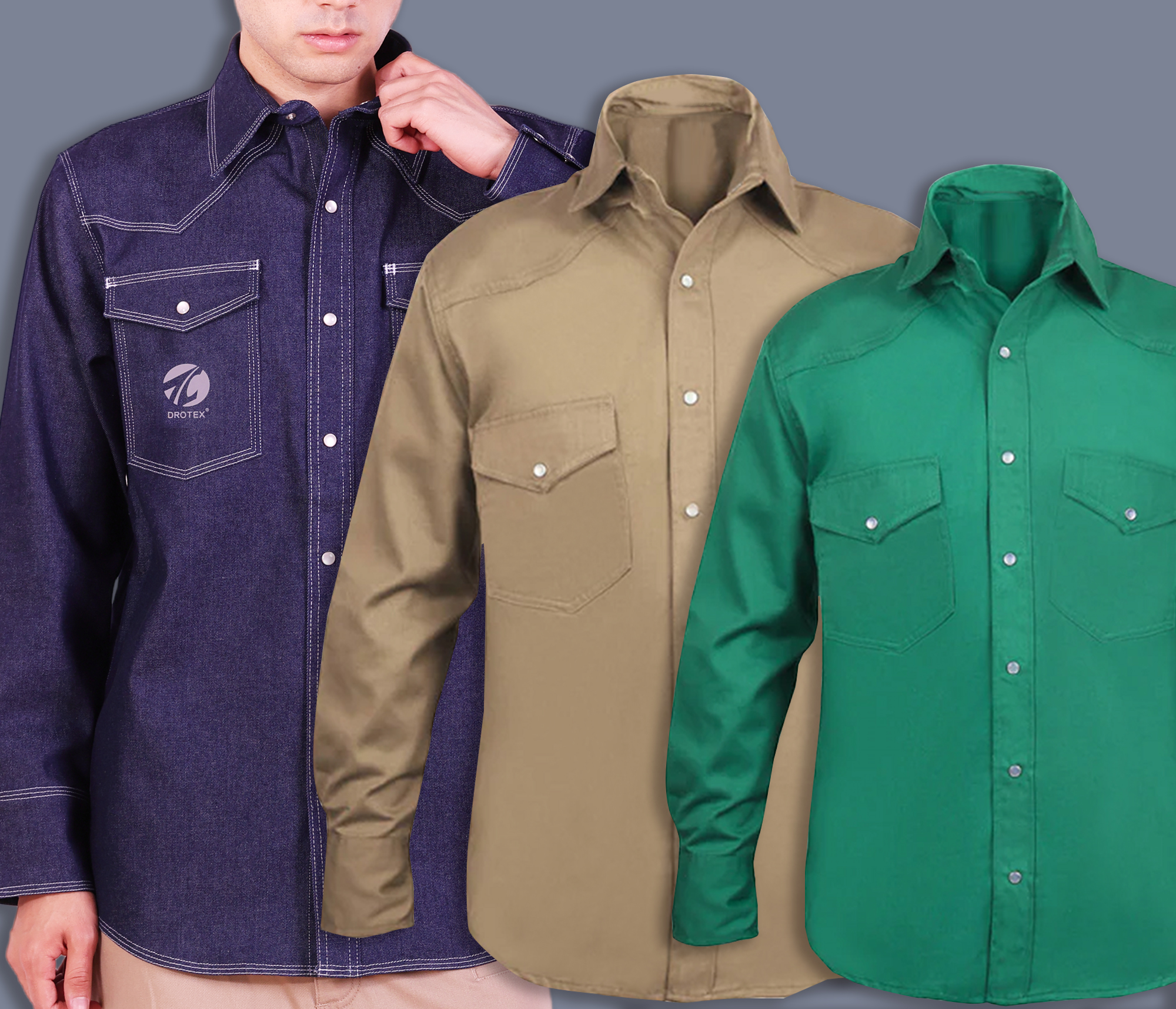
How to Choose FR Shirts and FR Pants for Your Crew
1. Start with a documented arc flash hazard assessment. Match the garment’s arc rating to the calculated incident energy of each task. Never pick FR wear by guesswork.
2. Prioritize long sleeves and full-length FR pants. Short-sleeve FR shirts leave arms exposed and are not acceptable for arc flash risk zones under NFPA 70E.
3. Check the label: confirm ASTM F1506 certification, clear arc rating, fiber content, and approved care instructions. Avoid unmarked “flame resistant” apparel for electrical arc work.
4. Fit matters. Too tight = fabric stretches, lowers arc protection. Too baggy = fabric can catch on equipment. Look for work-tailored cuts, gussets, reinforced seams, and utility pockets that do not compromise the protective fabric layer.
5. Consider high-visibility options: arc-rated hi-vis FR shirts and FR pants are available for outdoor line crews and roadside electrical work.