

The FR Cotton Fabric for Flame Resistant Uniforms and Coveralls
In high-risk workplaces like oil & gas fields and heavy construction sites, every piece of personal protective equipment (PPE) is a lifeline. Among the most critical components of worker safety is flame-resistant FR clothing, and at the heart of reliable FR workwear lies high-quality FR cotton fabric. Today, we’re diving deep into a premium FR cotton solution designed to meet the rigorous demands of these industries—breaking down its composition, specifications, certifications, and why it’s the trusted choice for protecting workers in hazardous environments.
What Makes This FR Cotton Fabric Stand Out?
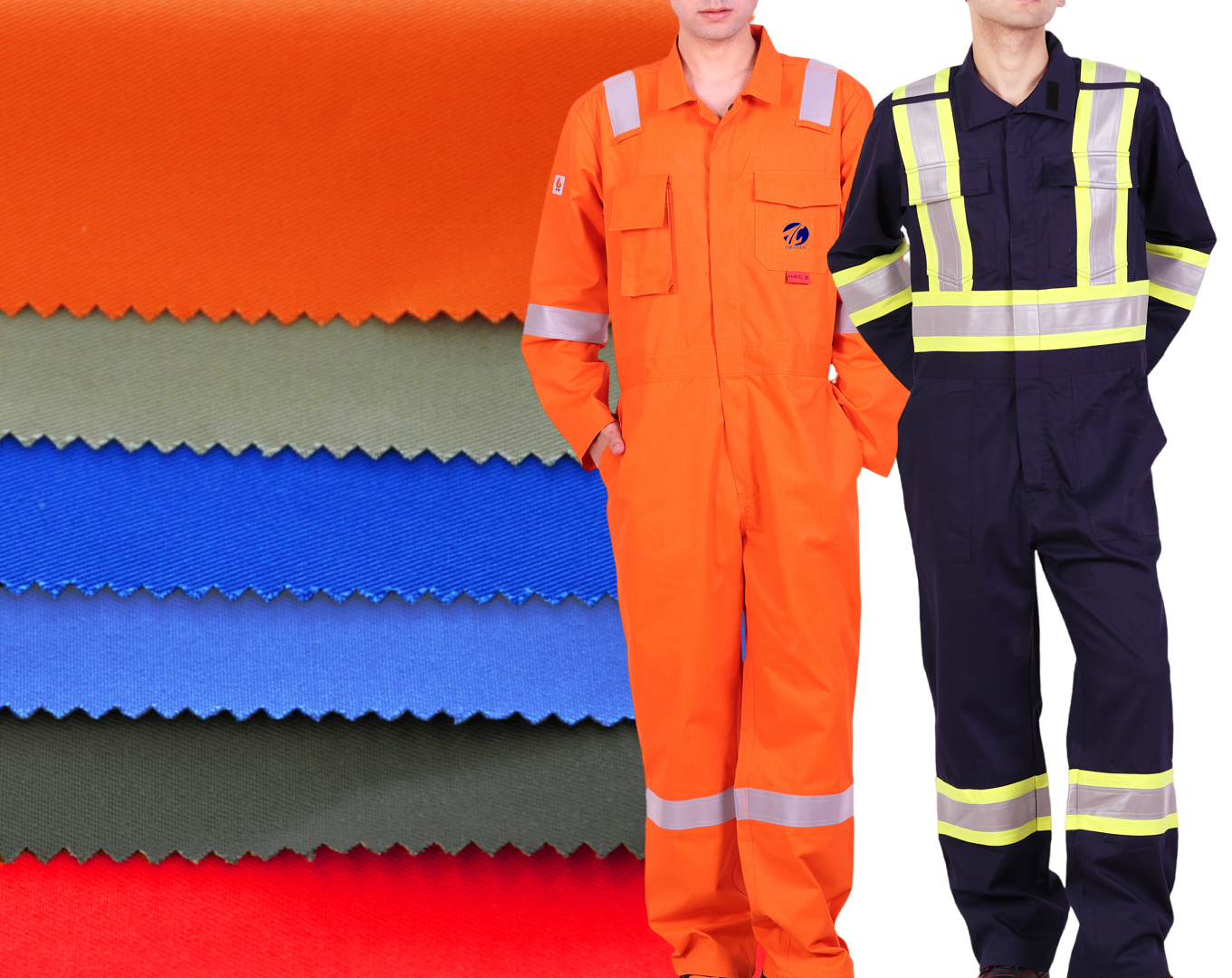
Not all FR fabrics are created equal, especially when it comes to balancing safety, comfort, and durability. This 100% cotton FR fabric is engineered to check all the boxes for high-risk sectors, with every detail intentionally designed to prioritize worker protection without compromising wearability.
1. Composition: 100% Cotton with FR Treatment
At its core, this fabric is made from 100% cotton—offering the natural softness, breathability, and moisture-wicking properties that workers need for long hours on the job. Unlike synthetic alternatives, cotton is hypoallergenic, gentle on the skin, and allows for optimal airflow, reducing discomfort during extended wear in hot or humid conditions. But what elevates it to industrial safety standards is its permanent flame-retardant finish, available in either THPC or Proban treatments.
Both THPC (Tetrakis(hydroxymethyl)phosphonium chloride) and Proban finishes deliver long-lasting FR protection that won’t wash out or degrade over time. The Proban process, in particular, involves reacting THPC with urea to form insoluble polymers that bond to the cotton fibers, creating a flame-retardant barrier that remains effective even after 50–100 industrial washes. This permanence is critical for workwear that undergoes frequent laundering, ensuring consistent safety performance throughout the garment’s lifespan.
2. Weave & Weight: Durability Meets Comfort
Crafted with a twill weave, this FR cotton fabric boasts exceptional durability and strength—essential for withstanding the rough conditions of oil & gas and heavy construction work. Twill weave creates a dense, tightly woven structure that resists tearing, abrasion, and wear from tools, machinery, and harsh environmental elements. Unlike plain weave fabrics, twill also offers a smoother surface and better drape, making it ideal for tailored uniforms and coveralls that need to move with the worker.
With a weight of 270–290 gsm (grams per square meter), this fabric strikes the perfect balance between protection and comfort. It’s heavy enough to provide a robust barrier against heat and flames but light enough to avoid weighing workers down—critical for jobs that require physical mobility, such as drilling, construction, or maintenance tasks. This weight range also ensures the fabric holds its shape well, even after repeated use and laundering.
3. Dimensions: Versatility for Workwear Design
Measuring 57/58 inches in width, this FR cotton fabric offers ample versatility for manufacturing a range of workwear pieces, from full-coverage coveralls to long-sleeve uniforms. The standard width simplifies pattern cutting and reduces material waste, making it a cost-effective choice for bulk workwear production. Whether designing custom uniforms for a large oil rig crew or standard coveralls for construction teams, this fabric’s dimensions align with industry norms for efficient manufacturing.
Non-Negotiable FR Standards: EN ISO 11612 & NFPA 2112
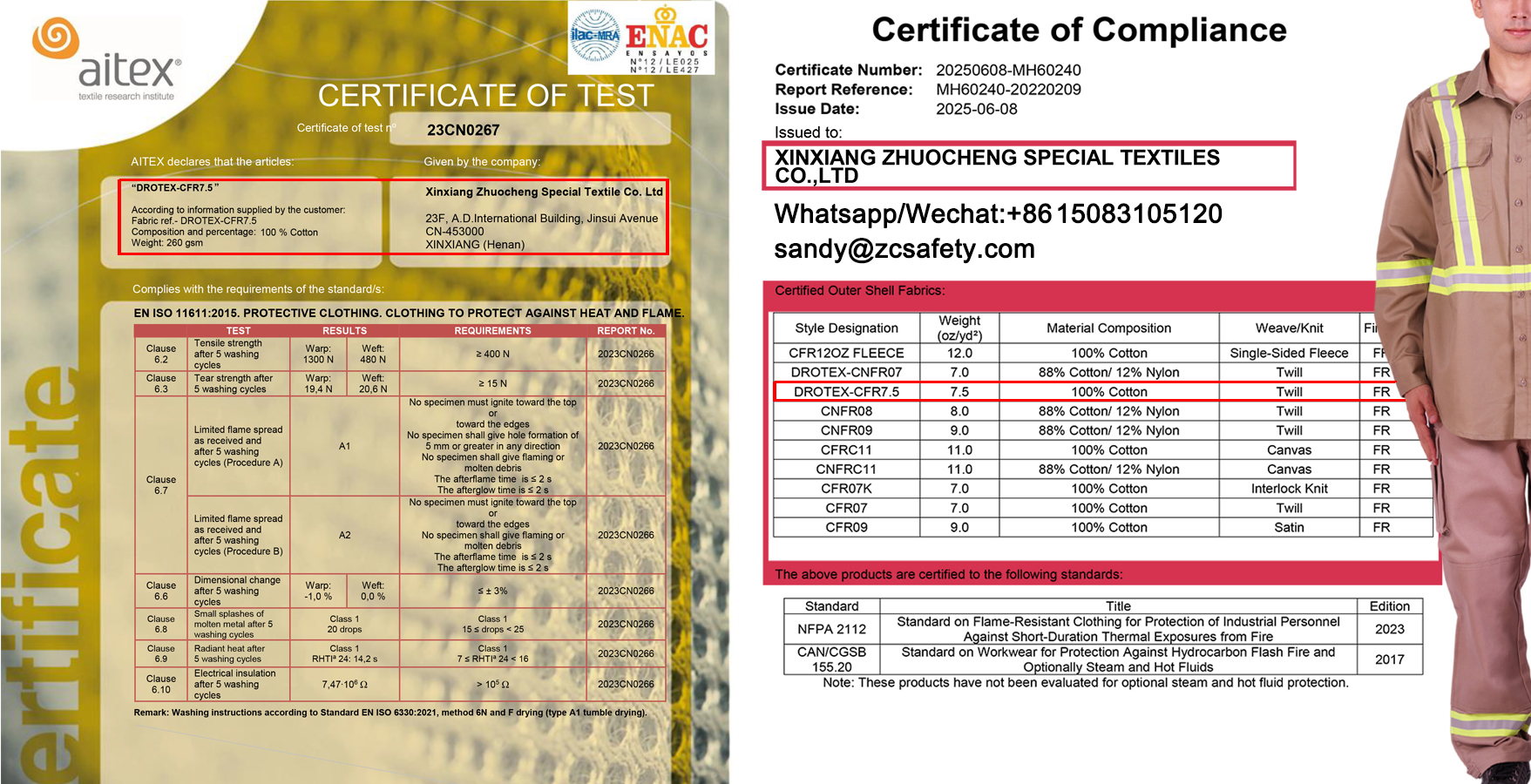
When it comes to FR clothing, compliance with global safety standards is non-negotiable—and this fabric is engineered to meet two of the most rigorous benchmarks: EN ISO 11612 and NFPA 2112.
EN ISO 11612 is the European standard for flame-resistant protective clothing, specifying performance requirements for fabrics exposed to heat and flame in industrial settings. It tests for resistance to convective heat, radiant heat, molten metal splashes, and flame spread, ensuring the fabric can protect workers from serious burns in the event of a fire or thermal hazard. For companies operating in the EU or supplying to European markets, compliance with EN ISO 11612 is a must.
NFPA 2112, developed by the National Fire Protection Association (NFPA), is the leading U.S. standard for FR clothing for industrial workers. It mandates that fabrics must self-extinguish within seconds of removing the ignition source, prevent flame spread, and limit burn injury by 50–70% compared to non-FR materials. This standard is widely recognized in the oil & gas industry, where workers face constant risks of flash fires, gas explosions, and other thermal hazards.
By meeting both EN ISO 11612 and NFPA 2112, this FR cotton fabric ensures global compliance, making it a versatile choice for multinational companies or those serving both European and North American markets.
Additional Certifications: Going Beyond Basic Safety
While core FR standards are essential, this fabric also offers optional certifications that address additional safety and sustainability needs—making it a standout choice for forward-thinking companies.
OEKO-TEX Standard 100: Safety for Workers & the Environment
The OEKO-TEX Standard 100 is an international certification that guarantees the fabric is free from harmful substances, including heavy metals, pesticides, carcinogens, and allergens. This certification is critical for worker safety, as it ensures the fabric won’t cause skin irritation or long-term health issues, even with prolonged contact. Additionally, OEKO-TEX certification requires compliance with strict environmental standards during production, ensuring the fabric is manufactured in a way that minimizes harm to the planet and workers in the supply chain. For companies prioritizing sustainability and worker well-being, OEKO-TEX Standard 100 is a valuable add-on.
Antistatic (EN 1149-5): Mitigating Explosion Risks
In oil & gas environments, electrostatic discharge (ESD) can be just as dangerous as open flames—even a small static spark can ignite flammable gases or vapors. The optional antistatic certification (EN 1149-5) ensures the fabric dissipates static electricity, preventing the buildup of charges that could trigger explosions. EN 1149-5 is a European standard that sets performance criteria for antistatic protective clothing, requiring fabrics to conduct static charge away from the worker and into the ground. This certification is especially critical for workers in ATEX (explosive atmosphere) zones, where static buildup poses a severe risk.
Third-Party Test Reports: Proof of Performance
Talk of safety is only meaningful with proof—and this FR cotton fabric comes with third-party test reports to validate its compliance with all stated standards. Third-party testing is conducted by independent, accredited laboratories, ensuring unbiased results that you can trust. These reports verify that the fabric meets EN ISO 11612, NFPA 2112, and any additional certifications (OEKO-TEX, EN 1149-5), giving you confidence that the workwear made from this fabric will perform as promised when workers need it most. For companies, these reports also simplify compliance audits and demonstrate a commitment to worker safety.
Ideal for Oil & Gas and Heavy Construction: Why It Matters
The oil & gas and heavy construction sectors are among the most hazardous industries, with workers facing daily risks of fire, explosions, thermal hazards, and physical abrasion. This FR cotton fabric is specifically designed to address the unique challenges of these industries:
•Oil & Gas: Protects against flash fires, gas explosions, and contact with hot surfaces. The permanent FR finish and antistatic properties (when certified) reduce the risk of ignition, while the breathable cotton keeps workers comfortable in hot, humid drilling or refining environments.
•Heavy Construction: Withstands abrasion from tools, machinery, and rough materials, while the FR protection guards against fires from welding sparks, electrical hazards, or combustible materials on job sites.
Whether used for full coveralls, jackets, or pants, this fabric delivers the durability, comfort, and safety that workers in these sectors depend on—day in and day out.
Final Thoughts: Investing in Worker Safety
When it comes to FR workwear, cutting corners on fabric quality is never an option. This 100% cotton FR fabric—with its permanent THPC/Proban finish, twill weave, and compliance with global safety standards—represents an investment in worker safety and long-term cost savings. By choosing a fabric that meets EN ISO 11612, NFPA 2112, and optional certifications like OEKO-TEX and EN 1149-5, you’re not just complying with regulations; you’re ensuring that the people on your team have the best possible protection against life-threatening hazards.
In high-risk industries, every second counts—and the right FR fabric can mean the difference between a near miss and a tragic accident. This FR cotton fabric is more than just material; it’s a commitment to keeping workers safe, comfortable, and productive, no matter the challenges they face on the job.